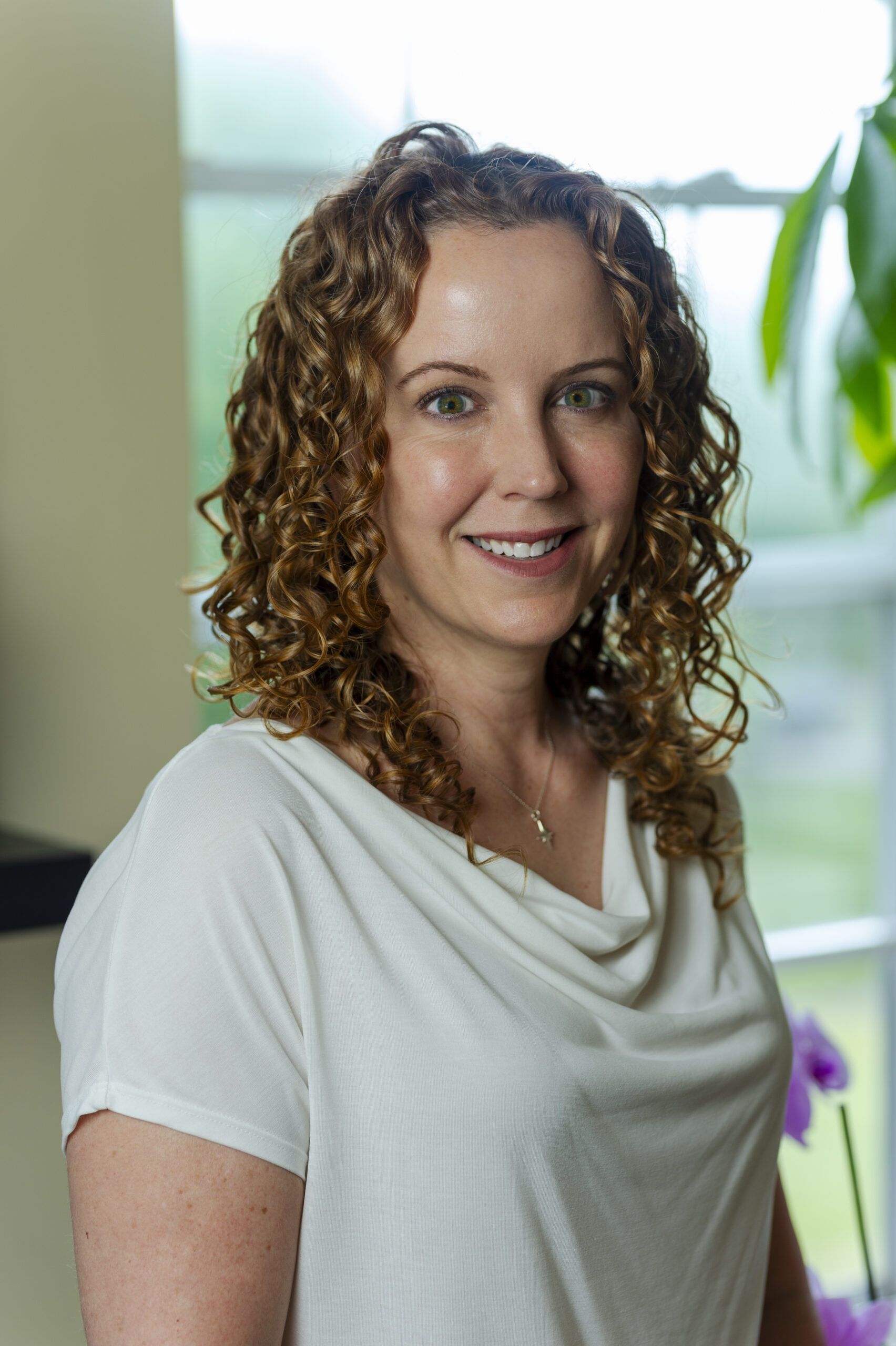
On Homeschooling with Jeanne Dee – Part 2

by Sarah Morgan on August 23, 2010

Go here to see the first part of my interview with Jeanne.

Do you think you would have decided to homeschool if you had remained in your house in California?

Yes, almost certainly, although I may have dipped into schools here and there if it seemed right or useful, like for language immersion. I love the freedom of homeschool. I’m really sorry that you had a bad experience with homeschooling, as I think that is rare. I’ve known many happy and successful homeschool families and my grown niece (who is a chemical engineer who graduated early from Rice, the top university in her field, got a 6-figure job before graduating, and bought her own home while still a teen) is a very successful example, so I have confidence in the method.

I’m not convinced that your homeschooling wasn’t a benefit for you, as look how well you have turned out, although it seems some differences could have helped a lot. I can’t help but be curious as to what would happen if you had been totally homeschooled, or if you had been totally schooled, as I think mixing school and homeschooling is more difficult. I was totally schooled (public schools) as was my husband (parochial school) and we tried many schools with our child (public, private, Montessori, Waldorf, gifted). Frankly, I think homeschool is a far superior method because you can gear it uniquely to the child. I sometimes think if I had to do it all over again, that I would not do ANY schooling with my child, as even with the best and tiniest schools, there is indoctrination, dogma, conformity, compliance and rigidity.

It’s truly a myth that homeschool is not good for socialization and that schools are. The opposite is true in my experience and the many studies that I have read. I think it is unnatural to keep kids imprisoned all day, doing mostly boring, rote learning for tests, and to only socialize with kids born their same year on short recesses. I think kids should be part of the community and socialize with people of ALL ages, have plenty of free time for self development and self-led learning, and that they are much better off being parent-attached and not peer-led with a Lord of the Flies mentality. Teachers are much too busy to monitor the ugliness, name calling, brutality and viciousness that goes on in schools between kids. NO ONE will love your child like you do and loving is the key to socialization. You know I’m a big fan of the book Hold Onto Your Kids:Why Parents Need to Matter More Than Peers and admire the Colfax family for living off the grid and sending three homeschooled boys to Harvard.

Mozart went to an amazing private kindergarten in California on a rural, 15-acre farm with animals, orchards and gardens they used to teach hands-on; with innovative, creative teachers trained in standard teaching as well as Montessori and Waldorf methods. They had classes as pottery, archery, unicycle, plays, stilt walking and juggling, etc. I volunteered daily, but even in that wonderful school with just 6 other kids in her class and less than 50 in the whole school and very involved parents, I was amazed at how hard it was to give the kids individual attention. It was still a mass-produced, dogmatic, inflexible experience. I learned that I could do much better on my own and save a ton of money to boot! I spent one full day there a week inside the classroom helping with literacy skills and could see for myself how much easier it was to just work with my own child. Two parents to one child is MUCH better odds. ;) I also volunteered at her excellent public school and I observed it as even worse, despite it being a small, rich school with many volunteers and an assistant in every room. The school in Spain works, because we are there strictly for the language immersion. It’s very short hours and short months, and they let us come and go as we please.

Schools are usually extremely rigid and political places (families who volunteer and add money to the school have more clout). They are not made to deal with exceptions – but every child is unique. Schools, sadly, are about learning for the test, and learning how to obey rules, not learning for learning’s sake. There are wonderful teachers out there, but most are hampered by the system and number of students. I don’t think our education system has worked for a long time and is totally not suited for the “new economy”.

When I see bright young adults who were unschooled like Ev Bogue or Eli Gerzon, or think of ones in the past like Margaret Mead, George Bernard Shaw, Thomas Edison, Jane Austen, etc., I feel confident that thinking and schooling differently will be the most supportive way to educate my unique child.


Post to Twitter Tweet This

{ 0 comments }

Press Pause

by Sarah Morgan on August 22, 2010

A faithful friend is a sturdy shelter; he who finds one finds a treasure. A faithful friend is beyond price, no sum can balance his worth. A faithful friend is a life-saving remedy, such as he who fears God finds; for he who fears God behaves accordingly, and his friend will be like himself.

Sirach 6:14-17

Post to Twitter Tweet This

{ 0 comments }

Religion and Hatred, and Other Supposed Opposites

by Sarah Morgan on August 18, 2010

This fuss going on in Lower Manhattan is beyond ridiculous; it’s wrong.

Religion is belief in the rightness of a deity. Patriotism is belief in the rightness of a country. The latter belief is usually to a lesser degree than the former, normally. But beliefs are not extenuating circumstances.

The people who call themselves Americans or Christians but pretend that this justifies spouting off increasingly anti-Moslem bile? They’re on a moral level with the people who call themselves followers of Islam but pretend that this justifies their violence and hatred.

And I’ve gotten so tired of seeing the first group talk as if anyone who disagrees is neither patriotic nor religious that I had to say something.

Now, please understand one thing very clearly: I am not saying that people prancing around with paper signs are as bad as murderers. What I am saying is that the same root is at the bottom of both passions and it’s horribly mistaken. It’s hooking onto our innate desire for the one who created us, and twisting it to trick us into wrongdoing. It’s taking the best that we’re capable of and trying to warp it into the worst that we’re capable of. It’s evil at its most fundamental.

And even if you’re a non-religious American, the first Amendment to our Constitution – remember, the one before that one about the guns that so many people love? – gives us all the freedom of religion. Even a religion you might not understand.

On top of which, there’s no factual justification for what the opponents seem to be saying. Nobody is trying to build a Ground Zero Mosque. Someone bought a condemned department store two blocks from Ground Zero and they want to knock it down to build a mosque and a big community center like a YMCA or a JCC. It’s called Park51. The area is depressed and vacant and has been for nine years, and there are a handful of religious buildings – Christian and Moslem, among others – already in the area. None of this appears to me to be out of the ordinary or menacing or disrespectful.

What I do find menacing and disrespectful – and, I hope, out of the ordinary – is the bigotry that this building is facing because of its religious purpose.

There have been mosques that have been fronts for training murderers. This is despicable. But that isn’t every mosque.

The IRA used Catholic churches and priests in their terrorist activities. That doesn’t make me a terrorist for going to church.

When you spout off words that make other people less equal and you justify yourself with information that you didn’t bother to check against facts, or logic, or the truth of the religion you espouse, you’re not being Christian and you’re not being a patriot.

We need reminding that “this is America, dammit, and in America, when somebody comes for your neighbor or his Bible or his Torah or his atheist manifesto or his Koran, you and I do what our fathers did and our grandmothers did and our founders did. You and I speak up.” MSNBC commentator’s Keith Olbermann’s whole comment is very much worth watching.

And for those of us who are Catholic, we need reminding that: “the Church regards with esteem also the Moslems. They adore the one God, living and subsisting in Himself; merciful and all-powerful, the Creator of heaven and earth, who has spoken to men; they take pains to submit wholeheartedly to even His inscrutable decrees, just as Abraham, with whom the faith of Islam takes pleasure in linking itself, submitted to God. Though they do not acknowledge Jesus as God, they revere Him as a prophet. They also honor Mary, His virgin Mother; at times they even call on her with devotion. In addition, they await the day of judgment when God will render their deserts to all those who have been raised up from the dead. Finally, they value the moral life and worship God especially through prayer, almsgiving and fasting. Since in the course of centuries not a few quarrels and hostilities have arisen between Christians and Moslems, this sacred synod urges all to forget the past and to work sincerely for mutual understanding and to preserve as well as to promote together for the benefit of all mankind social justice and moral welfare, as well as peace and freedom.”

Post to Twitter Tweet This

{ 6 comments }

On Homeschooling with Jeanne Dee

by Sarah Morgan on August 16, 2010

Jeanne Dee, her husband and their young daughter have been traveling the world for four years, RVing throughout Europe for most of the year and returning to Spain for some months. As such, their little girl is mainly homeschooled; they’re moving “base camp” to Asia so she can become fluent in Mandarin as she is in Spanish.

I’ve been a reader of Jeanne’s for years, loving their travel stories. But I admit that I disagreed with the concept of homeschooling. I was homeschooled until I was nine, and based on my experience, I’d never choose or recommend it. I’d been left to focus on what I liked at the expense of what I didn’t like or wasn’t introduced to, and that left an awful lot to catch up with. Obviously, my homeschooling wasn’t global, but nor was it structured or, in my opinion, done for the right reasons. So it’s with interest that I saw what homeschooling looked like when it’s done differently.

That’s why I asked Jeanne if she’d talk a bit about her daughter and their experience. She was kind enough to agree, and I’ll be posting her interview as a series, edited very slightly. I don’t know if our conversation is changing my mind, but it’s certainly opening it up, and I do agree with Jeanne that that’s always an invaluable thing.

The first thing I wanted to know was how she and her husband decided to homeschool. Here’s what she had to say.

Like most parents, we were interested in doing what was best for our child. We see parenting as a big responsibility to be taken seriously, as we think it can contribute to peace on this planet, and each child can affect generations to come. For us, loving, peace and education go together.

I have a passion for education and child-rearing – innovative, brain-research-based studies and classical ways. I think no matter what method one chooses to educate a child (public, private, homeschool, virtual, unschool, combination, etc.) it’s always the parents’ responsibility, not a responsibility to foist on others blindly. I also believe in conscious conception and prenatal psychology, and was researching these things long before even meeting my husband. He is less of a researcher, but we are pretty much on the same page.

We chose to do this even before conception. As a monolingual, I’ve always been interested in raising a bilingual or trilingual child from birth, as it’s the easiest way to learn another language, has many advantages for the brain, and I think it will be important for global citizens in the 21st century to have the advantage of knowing several languages.

A baby starts to learn language at three months in utero. Thus, we started “homeschooling” even at that point. We are big believers in attachment parenting and the continuum concept. Those 9 months are a sacred time.

I think we are still answering the question of how to do this. It is not a static question. All parents “homeschool” their children for the first 5 or 6 years, whether they realize it or not, facilitating everything from walking to talking to routines like meals and brushing teeth. Parents are the first teachers. Thus, for us, it was never just one answer, but many answers that keep evolving as our child and family evolves. It is a conscious and value-based perspective and reminds me of this quote: “Be as steady as the north star and as flexible as the wind.”

Post to Twitter Tweet This

{ 3 comments }